
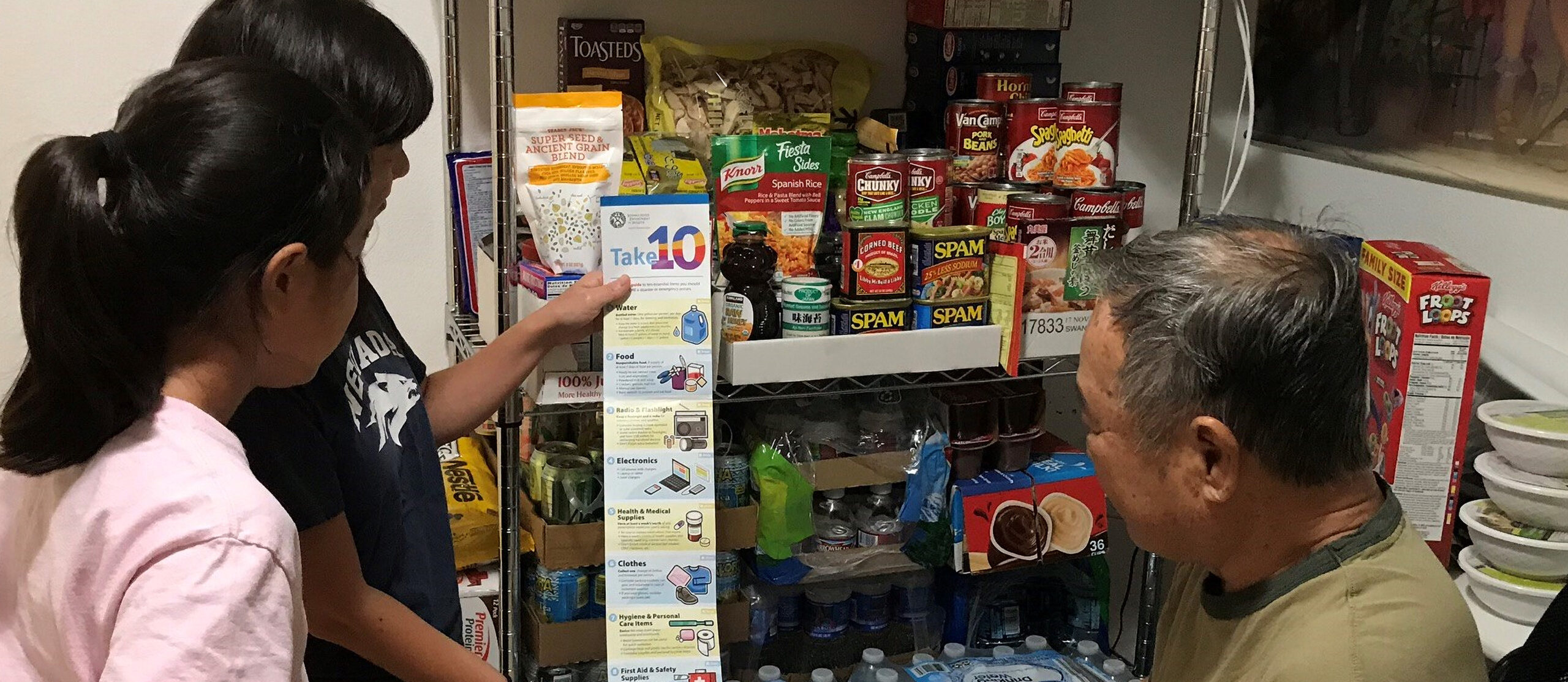
When disaster strikes—whether it is natural or human-made—you can be prepared.
Prepare Your Kit
Hawai‘i is vulnerable to many natural disasters and potential health emergencies, and our distance from the mainland makes us even more vulnerable. One way to prepare before disasters and emergencies happen is to prepare a go-bag, or an emergency kit. Even though emergency responders will be called in to assist, you may need to survive on your own for hours or even days immediately after an event.
To start your kit, think about all the people who live with you and what each person or pet would need to get through the day. Remember, in the event of a disaster or emergency, you may not be able to get out to access food, water, medicine, supplies, or electricity for a period of time.
Key considerations before you start:
- Plan out what you need for 14 days or start with as many days of supplies as you can.
- Stock supplies in an easy to find grab-and-go kit that has essential items for everyone in your household.
- Keep enough food, water, medicine, chargers, important documents, some cash, and other essential supplies for yourself and your family.
- Don’t forget about kids, pets, elderly relatives, someone who is pregnant or breastfeeding, and those with access and functional needs.
Our Take 10 Flyer (PDF) is a simple guide to ten essential items you should pack BEFORE a natural disaster or health emergency occurs.
Ten Essential Items to Pack
These essential items should be packed BEFORE a natural disaster or health emergency occurs. Have these ready if you shelter in place or if you must quarantine. Bring as much as you can if you must evacuate.
Water
Bottled water. One gallon per person, per day, for at least 14 days, for drinking and sanitation.
- Keep the water in a cool, dark place and change to a fresh supply every six months.
- Example: A family of 3 should have at least 42 gallons of water on hand; 1 gallon x 3 people x 14 days = 42 gallons
Food
Nonperishable food. A supply of at least 14 days of food per person.
- Ready-to-eat canned meat, fruit, and vegetables
- Powdered milk and soup
- Crackers, granola, trail mix
- Manual can opener
- Basic utensils to prepare and eat food
Radio & Flashlight
Keep a flashlight and a radio for listening to news and weather.
- Consider buying a crank-operated or solar-powered radio.
- Some radios double as flashlights and have USB outlets for recharging handheld devices.
- Don’t forget extra batteries!

Electronics
- Cellphones with chargers
- Laptop or tablet
- Solar chargers
Health &
Medical Supplies
Have at least two weeks’ worth of any prescription medicines you’re taking.
- Be sure to replace medications that expire.
- Have two weeks’ supply of health supplies you typically need (e.g., contact lens cleaner).
- Don’t forget medical devices like inhalers, thermometers, CPAP machines, etc.
Clothes
Collect one change of clothes and footwear per person.
- Consider packing blankets, rain gear, and outerwear in case of inclement weather.
- If you wear glasses, consider packing a spare pair.

Hygiene & Personal
Care Items
Basics like soap, toilet paper, toothpaste, and toothbrush.
- Hand sanitizer or most towelettes can be useful for quick sanitation.
- Garbage bags and plastic ties for sanitary disposal.
- Feminine supplies and personal hygiene items.
First Aid &
Safety Supplies
Basics such as antiseptic, gloves, bandages, and non-prescription medicines (e.g., aspirin).
- Make or buy a pre-made first-aid kit (available at most pharmacies or grocery stores).
- Multipurpose tool (e.g., Swiss Army knife)
- Masks, sunscreen, and mosquito repellent

Cash &
Documents
Important documents plus enough money (in small bills) to purchase extra food, water, or other items, for at least 14 days. Store these items in a waterproof pouch.
- Identification
- Insurance cards
- Contact list (doctors, family, etc.)
- Immunization records & medical history
- Bank account info
Supplies for
Unique Needs
Remember to plan for family members with unique needs.
- Infants/toddlers – diapers, formula, bottles, wipes, toys/comfort items
- Elderly or those with special needs – hearing aid, wheelchair, eyeglasses, etc.
- Books, games, puzzles, cards, other activities
- Pets – food and water, leashes, carriers